

|
Cienaga
(Page also available in Spanish
- Español) |
 |
This model was developed for the case of watersheds of Jujuy (Argentina), one of the three study sites of the project. This area of study is a “Bosque Modelo” (Model Forest): a platform for multi-stakeholder dialogue, based on the concept of sustainable human development, which aims coordinated planning of land management. The Bosque Modelo Jujuy is a civil association that carries out actions and implement projects in order to contribute to the integral management of natural resources in the basin Los Pericos- Manantiales in the province of Jujuy, in northern Argentina. |
The main objective of EcoAdapt is to improve the
capacity of local politicians and scientists to engage
in interdisciplinary action research to enhance their
collective capacity to adapt to climate change
communities. The project is based on two premises: 1)
the adaptation to climate change is not something that
can be done in an isolated way, and 2) management based
on ecosystems is a solid foundation for a successful
adaptation to climate change in Latin America.
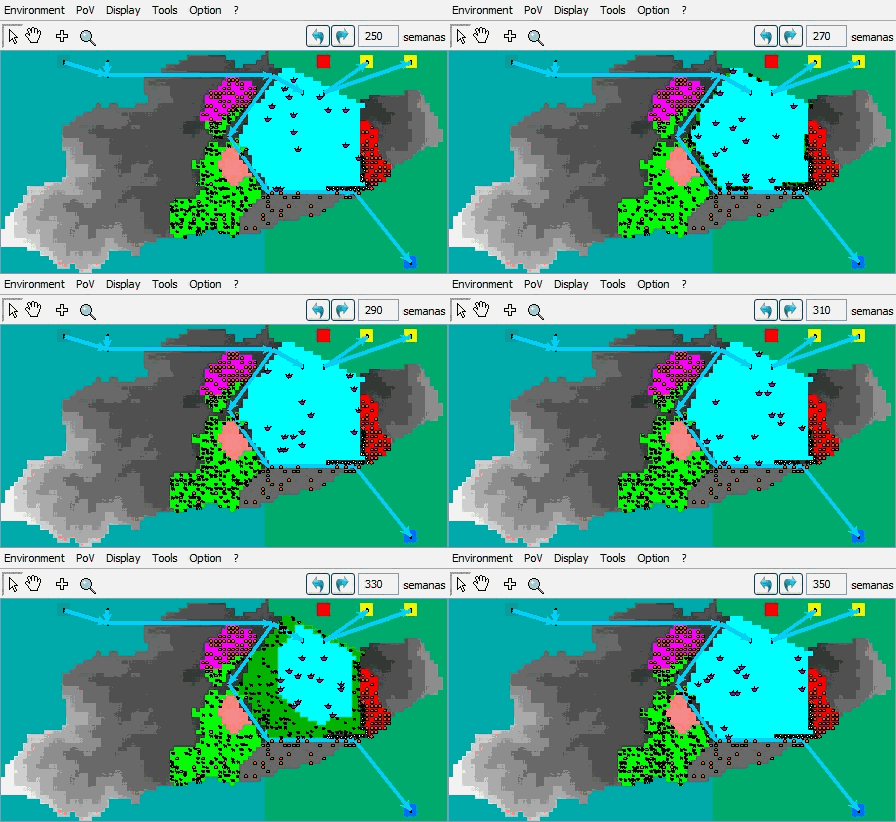
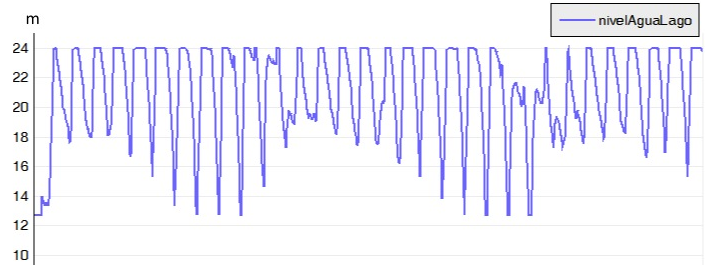
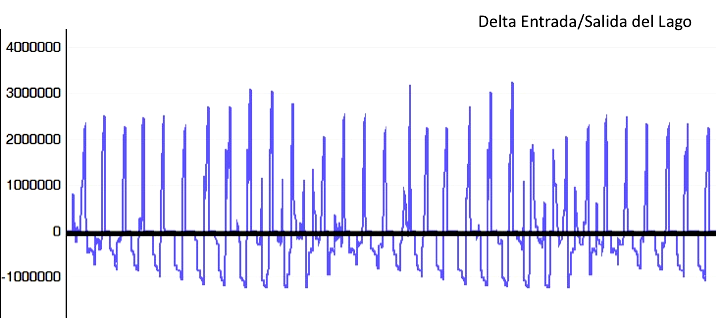
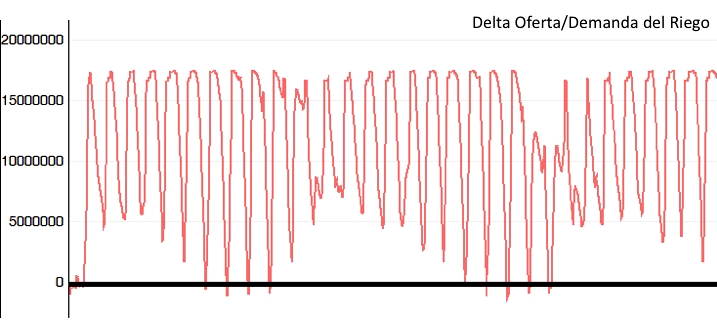
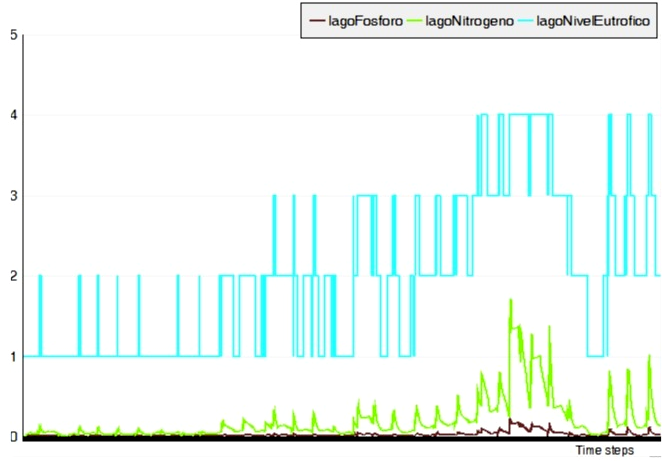
This model focuses on a lake in the area of Jujuy: the Cienaga dam. It is fed by runoff from the small basin, but also through the water channels from the Rio Grande and the Rio Perico. In contrast, it feeds two agricultural areas where irrigation is practiced. The first challenge is to maintain a satisfactory level of water in the lake to supply the nearby town drinking water and to supply irrigation areas, depending on weather conditions and changes in river flows. The second challenge is to maintain a satisfactory water quality, both to supply the city, but also to maintain aquatic life. This quality also attracts tourists who enjoy the place while contributing to its degradation. Because this place attracts many people that are installed in houses untreated sewage goes directly into the lake.
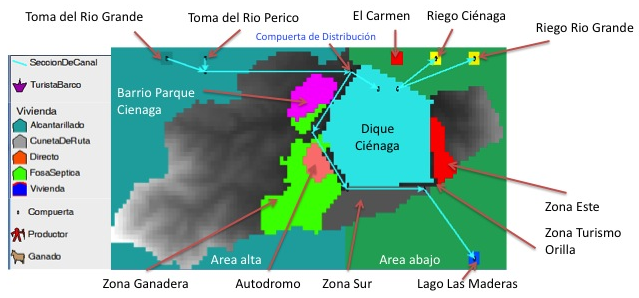
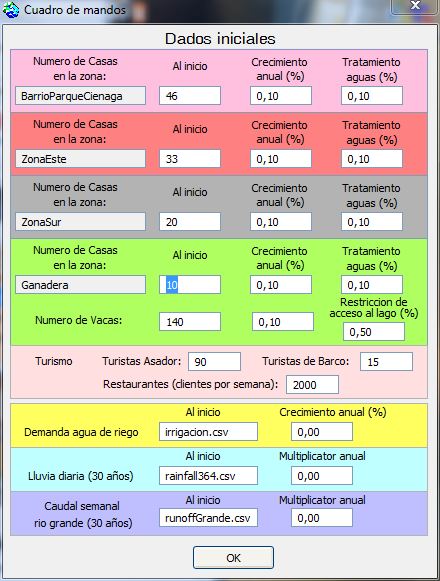
At the start of a simulation, the user is invited to choose some elements of the initial configuration (number of houses in each area of the basin), and parameters related to the dynamics of the system: annual growth rate and forcing variables (files of 30 years data: precipitation, flow of the Rio Grande and irrigation demand)
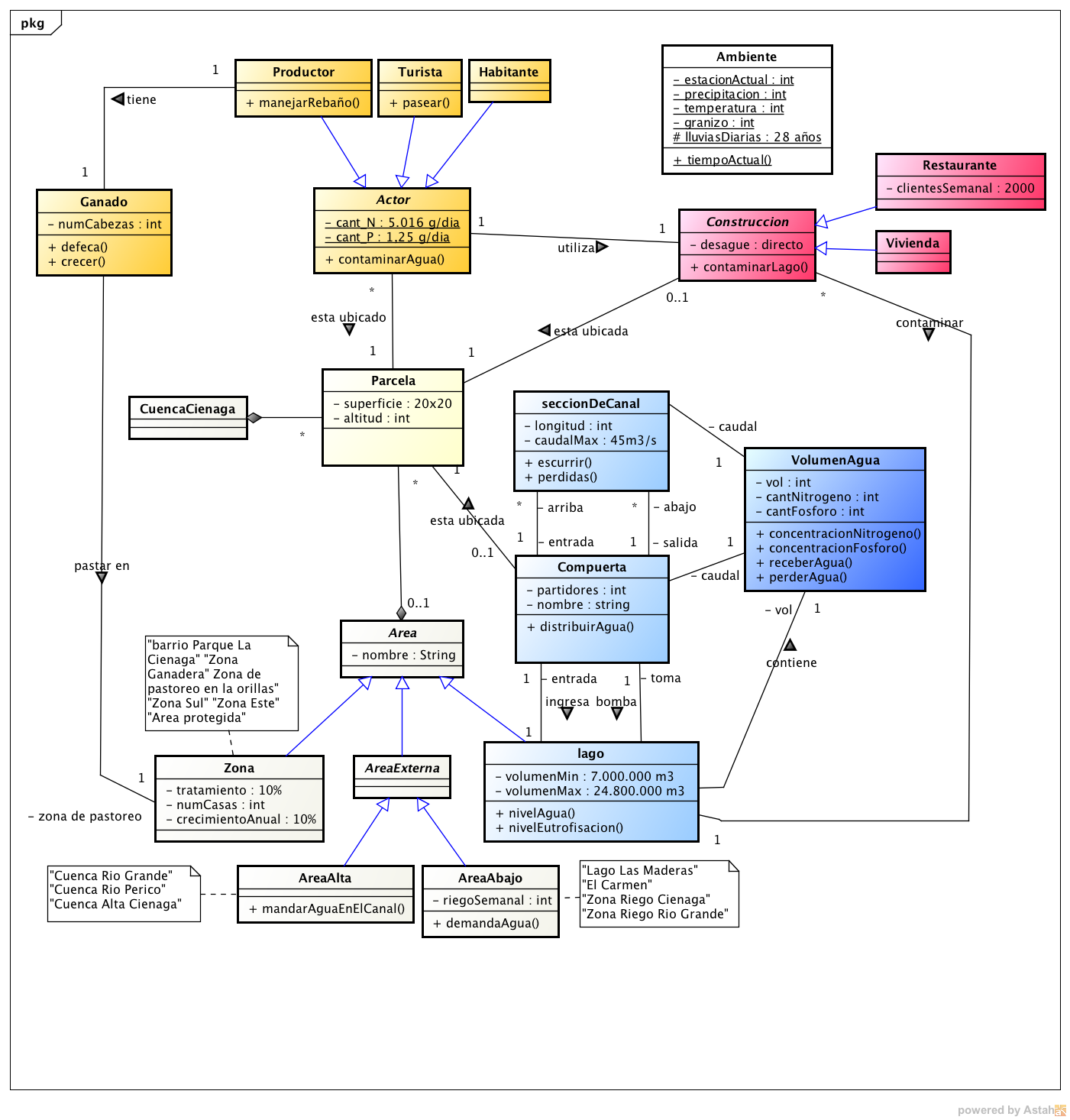
The following diagram shows the general structure of the model:
For more information, contact the author.
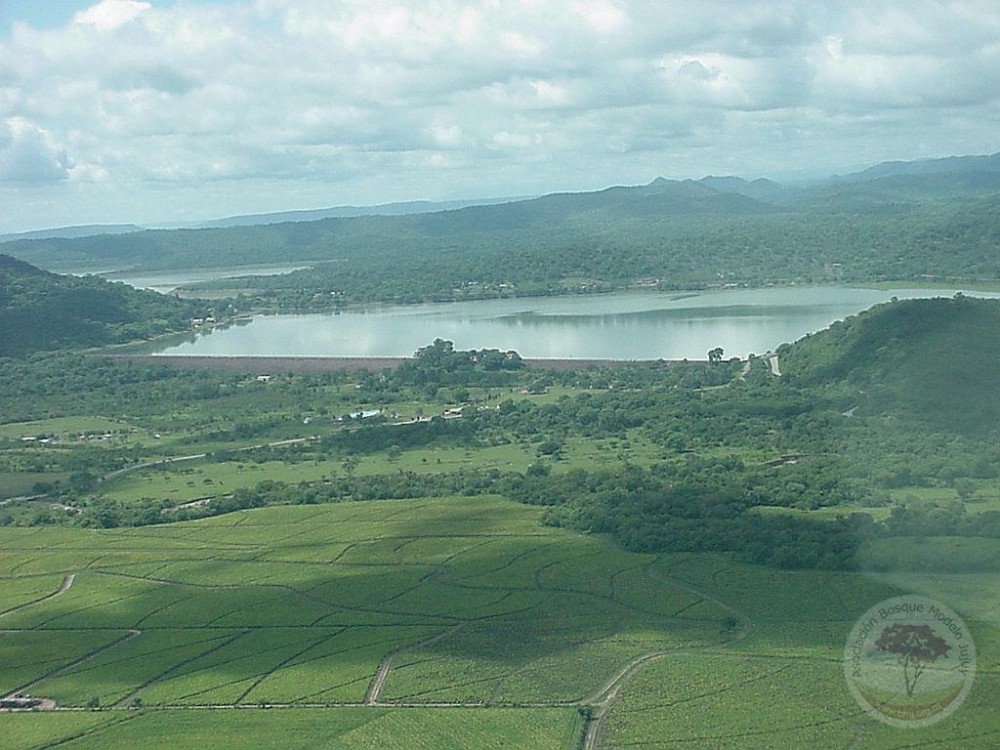 © Foto Bosque Modelo
Jujuy
© Foto Bosque Modelo
Jujuy