|
JLB... a model by
Jean-Luc Bonnefoy
|
|
This paper demonstrates that multi-agent systems have the capacity to model a region in all its complexity. An example is developed to show that these tools are not only capable of spatializing and distributing the behaviour of individuals, but above all, that they allow individuals to integrate different perceptions of space as well as the constraints imposed on them by a community. A dialectic is established between individuals, spaces and society, which is used to simulate a region using clearly defined social representations and spatial practices, which are suitable for testing our geographical theories and hypotheses. This page contains a description of the model, some few results and the code of the model.
|
 |
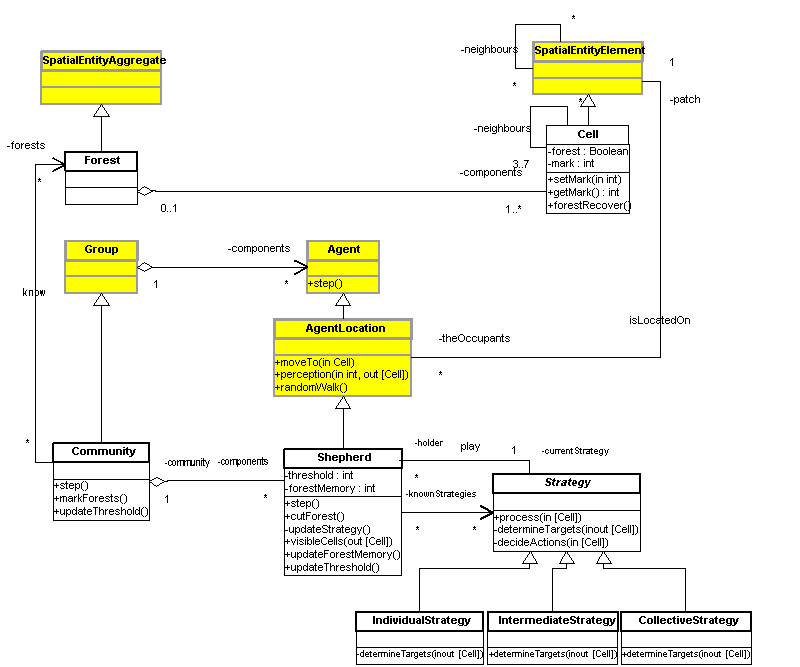
The UML diagrams below have been created with two software ingineer tools : Vision (for the class diagram) and Rose (for the others).
The UML class diagram, describing the static structure of the model in the implementation view.
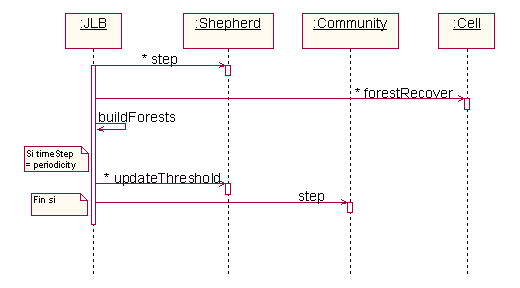
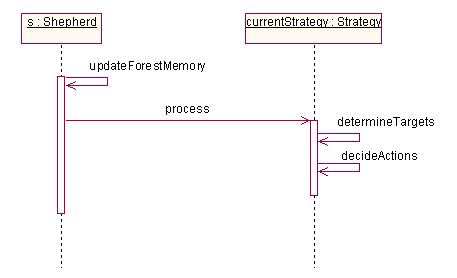
The following UML sequence diagram, describing the dynamic of the model main step :
The following UML sequence diagram, describing the dynamic of the agent step :
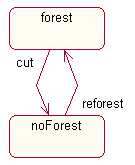
The following UML state diagram, describing the states of the cells :
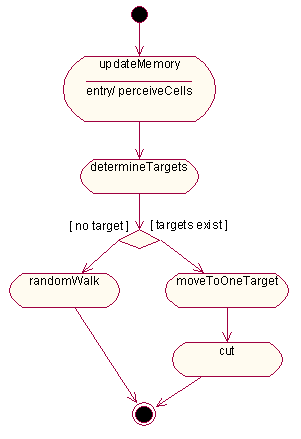
The following UML activity diagram, describing the sphepherds activities:
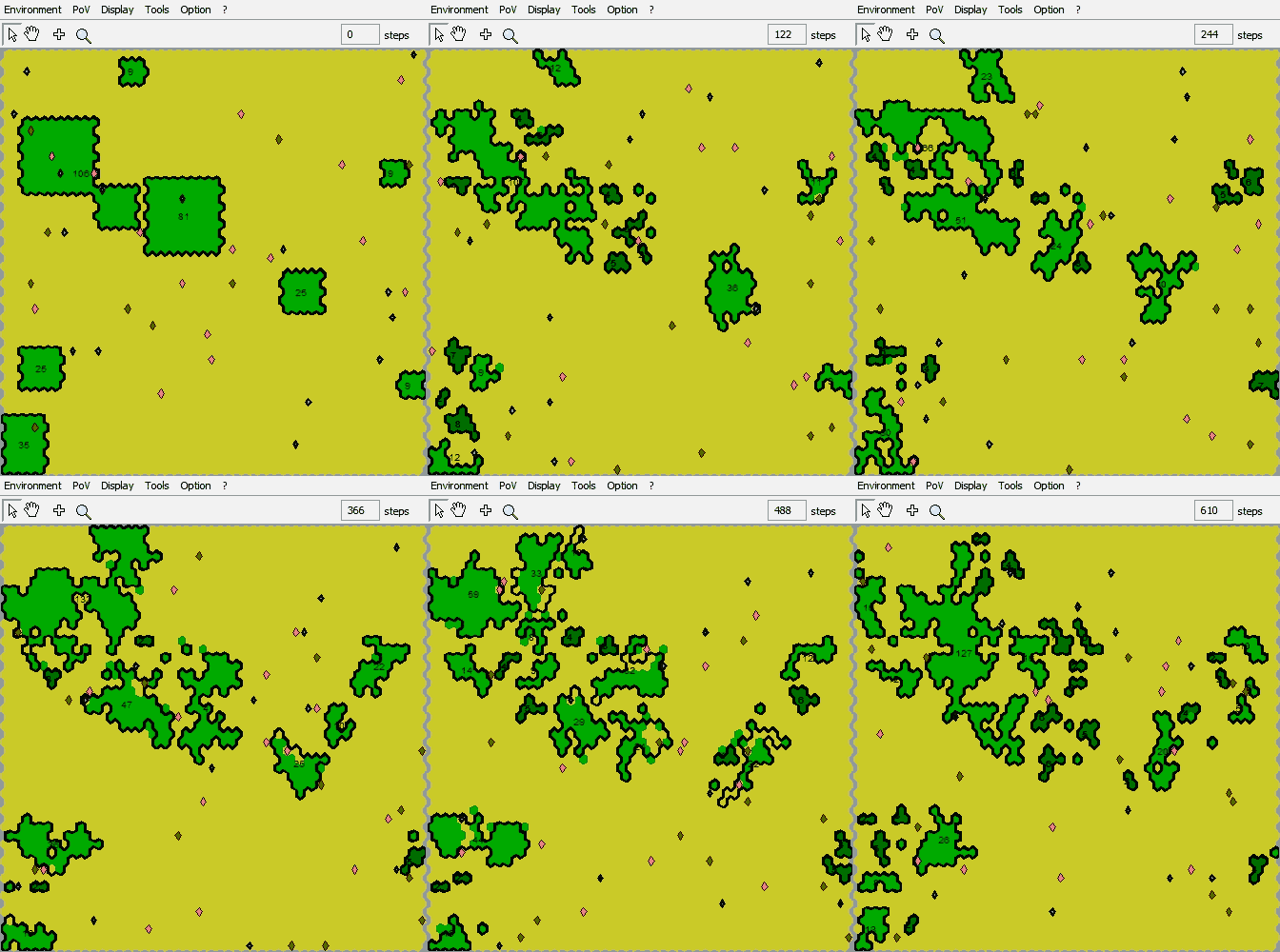
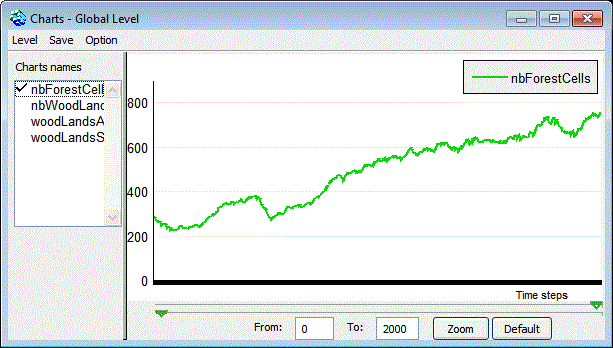
The short film (see animated gif on top) presents one simulation of 250 steps (21 years, with 1 step = 1 month), starting with a community of 40 shepherds. The periodicity to update the thresholds and to mark up the forests is 10 years.
The following graphes present the evolution of the landscape and the wood lands:
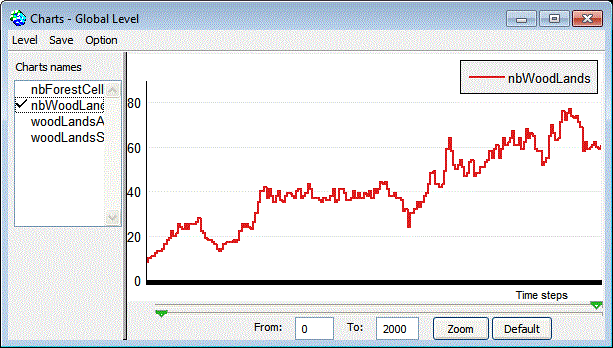
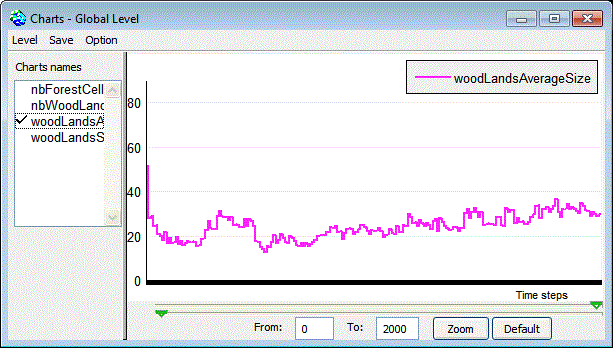
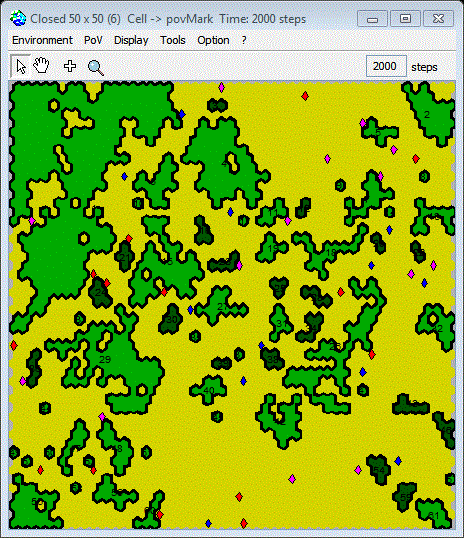 (in dark green, the
marked forests)
(in dark green, the
marked forests)
Bonnefoy, J.-L., Le
Page, C., Rouchier, J. et Bousquet, F., 2000. Modelling
spatial practices and social representations of space
using
multi-agents. p. 155-168 in: G. Ballot et G. Weisbuch
(eds), Application of simulation to social science.
Hermès, Paris.
Bonnefoy, J.-L., Bousquet, F. et Rouchier,
J., 2001. Modélisation dune interaction individus,
espace, société par les systèmes
multi-agents : pâture en forêt virtuelle. Lespace
géographique 1-2001: 13-25.
For more information, contact P. Bommel or C. Le Page.
Download the model: version for Cormas2002 or version for Cormas 2013.